
Virtual Reality Fashion: Pros & Cons in the New Era of Digital Fashion

Virtual Reality Fashion is redefining how consumers discover, try, and purchase clothing in an increasingly digital-first world. With virtual spaces, immersive showrooms, avatar-based try-ons, and interactive brand experiences, VR is no longer a futuristic concept - it is an active driver of transformation in the fashion industry. As brands look for new ways to innovate, VR bridges the gap between physical retail and digital engagement, creating entirely new ecosystems for shopping, designing, and storytelling.
From luxury maisons launching VR runway shows to e-commerce retailers building immersive fitting rooms, the shift is accelerating. Digital fashion studios like Mimic Digital Fashion are leading the way, delivering hyper-realistic virtual try-on systems and 3D garment pipelines that allow consumers to explore apparel like never before. Yet, as with any cutting-edge technology, the integration of Virtual Reality Fashion brings both advantages and challenges.
This comprehensive guide explores the pros and cons of Virtual Reality in fashion, how the industry is adopting it, core technologies involved, and what the future holds for immersive digital apparel.
Table of Contents
What Is Virtual Reality Fashion?

Virtual Reality Fashion refers to the use of VR technologies to create immersive, 3D, interactive experiences around clothing, accessories, and digital garments. Instead of merely browsing pictures, users can explore full virtual environments, try garments on avatars, customize designs, and even attend runway shows inside virtual worlds.
Key characteristics include:
Immersive 3D fashion environments
Avatar-based or body-scanned virtual try-on
Virtual showrooms and VR retail stores
3D digital garments designed for interactive use
Real-time simulation of fabric physics
VR Fashion builds on the foundations of digital fashion pipelines, like those showcased in the Mimic Digital Fashion portfolio - to merge creativity, technology, and commerce into one ecosystem.
How VR Is Transforming Digital Fashion

Virtual Reality Fashion is reshaping nearly every workflow in the fashion value chain - from design and sampling to marketing and consumer purchase behavior. Thanks to advancements in virtual try-on and photorealistic garments, VR is becoming a powerful extension of digital fashion innovation.
To understand how VR fits into the broader landscape, it is useful to explore the evolution of virtual try-on systems. For example, Mimic Digital Fashion explains how VTO technology is changing retail in their article on how virtual try-on technology is revolutionizing digital fashion. VR expands upon this by transporting the user into a full 3D space instead of overlaying garments on a screen.
Transformation areas include:
Design: 3D prototyping and fabric simulation reduce physical sample waste.
Retail: VR stores offer immersive browsing with interactive product discovery.
Marketing: Virtual runways and campaigns reach global audiences instantly.
Consumer Experience: VR try-ons allow realistic visualization with true-to-life movement.
Pros of Virtual Reality Fashion
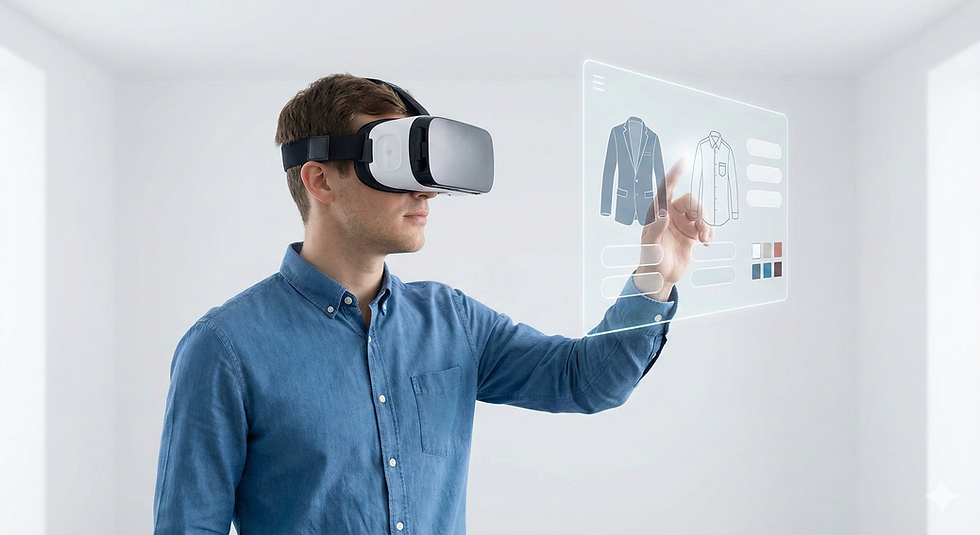
1. Immersive and Interactive Shopper Experience
VR provides a level of engagement traditional e-commerce cannot match. Customers can walk through virtual boutiques, interact with clothes, and see garments in motion.
2. Hyper-Realistic Visualization
With real-time simulation, consumers can preview fit, shape, texture, and movement - creating more confidence before purchase.
3. Reduced Physical Waste
Digital sampling significantly cuts down on fabric waste, shipping, and physical prototypes.
4. New Creative Possibilities
Designers can craft garments unconstrained by physics - digital couture, AR filters, and fantastical materials.
5. Scalable Global Reach
A VR fashion event can be accessed by thousands worldwide, boosting brand exposure without logistical constraints.
6. Enhanced Personalization
VR-enabled avatars mimic body shapes, movement, and personal preferences for more accurate garment recommendations.
7. Strong Integration with Virtual Try-On
Platforms like Mimic Digital Fashion develop advanced VR-compatible VTO systems that streamline the consumer journey. See the related insights in their post on the future of fashion and virtual try-ons.
Cons of Virtual Reality Fashion
1. High Hardware & Implementation Costs
VR headsets, 3D workflows, and real-time applications require a sizeable investment—especially for small brands.
2. Technical Complexity
Building VR environments demands skills in 3D modeling, development, optimization, and UX design.
3. Learning Curve for Users
Not all consumers are familiar with VR navigation; onboarding must be intuitive.
4. Limited Market Penetration (for now)
VR hardware adoption, while growing, still lags behind mobile AR.
5. Performance Constraints
To avoid motion sickness and ensure realism, VR requires optimized fabrics, clothing physics, and environments - demanding substantial processing power.
6. Content Accuracy Matters
If the garment simulation is not highly realistic, it can erode user trust. This is why studios specializing in realism - like Mimic Digital Fashion - are crucial.
VR Fashion vs. Traditional Online Retail
Below is a quick comparison that highlights the evolution from static e-commerce to immersive VR experiences.
Feature/Experience | Traditional E-Commerce | Virtual Reality Fashion |
Product View | Static 2D photos | Interactive 3D garments in VR |
Try-On | Limited (AR overlays) | Full avatar-based VR try-on |
Engagement Level | Low to medium | Highly immersive & interactive |
Personalization | Size charts | Custom body-scanned avatars |
Feel of Fabric | No physics | Real-time simulated textiles |
Store Experience | Website browsing | VR stores, showrooms, runways |
Emotional Impact | Minimal | High—experiential retail |
Key Use Cases Across the Fashion Industry

VR Fashion is being adopted across multiple segments, each leveraging immersive experiences for different goals.
1. Retail & E-Commerce
Brands use VR stores to create memorable, personalized shopping journeys.
2. Virtual Fashion Shows
Designers host VR runways to present collections globally without physical limitations.
3. Digital Prototyping & Product Development
Reducing physical samples accelerates time-to-market and lowers textile waste.
4. Marketing & Brand Storytelling
Immersive campaigns foster emotional connections with consumers.
5. Metaverse & Avatar Fashion
Digital garments for avatars in gaming and metaverse platforms evolve from entertainment to commerce.
6. Made-to-Measure Fashion
VR combined with body-scanning helps tailor precise, custom-fit fashion.
7. Training & Education
Fashion schools use VR to teach pattern-making, draping, and digital garment workflows.
For brands needing expert implementation, agencies like Mimic Digital Fashion offer professional services in digital garment creation and immersive experiences. Learn more at their services page.
Technologies Powering VR Fashion

Virtual Reality Fashion relies on a fusion of advanced digital technologies that work together to produce immersive environments and realistic garment simulations.
Core Technologies
Real-Time Rendering (Unreal Engine, Unity)
3D Modeling & Digital Garment Creation
Cloth Simulation & Physics
Motion Capture for natural avatar animation
Body Scanning for personalized avatars
Haptic Feedback (emerging)
Virtual Try-On Systems (from providers like Mimic Digital Fashion)
These technologies are part of the broader infrastructure explored on the Mimic Digital Fashion’s Tech page.
The Role of Virtual Try-Ons in VR Fashion
Virtual try-ons (VTOs) are foundational to Virtual Reality Fashion. VR amplifies traditional VTO by placing the user inside an immersive environment and enabling them to inspect garments from all angles with true-to-life motion and fabric behavior.
Benefits of VR-Based Try-Ons
Realistic fit representation
Accurate physics-based draping
Different lighting conditions
Multi-angle inspection
Emotional engagement and buyer confidence
Explore more about the evolution of virtual try-ons in Mimic Digital Fashion’s post on the future of fashion and virtual try-ons.
How Brands Are Using VR Fashion Today

Fashion houses, retailers, and digital designers are integrating VR in several innovative ways:
VR Flagship Stores that mirror or expand on physical stores
Mixed-Reality Fashion Weeks like Metaverse Fashion Week
Immersive Lookbooks featuring interactive garments
VR-powered customization tools for personalizing outfits
Digital-only garments sold as NFTs or avatar skins
As consumers increasingly engage with immersive digital content, VR provides a path toward future-proof fashion retail.
Challenges in Scaling Virtual Reality Fashion
Even though VR Fashion offers clear advantages, brands face obstacles as they scale new immersive workflows.
High production costs for photorealistic 3D garments
Need for advanced technical expertise
Device adoption limitations
Optimization challenges to ensure smooth VR performance
Maintaining accuracy across multiple platforms
Integration with legacy retail systems
This is why partnering with specialized digital fashion studios - like Mimic Digital Fashion - becomes essential for achieving photorealistic, scalable VR solutions.
The Future of Virtual Reality Fashion

The next decade will see VR Fashion shift from an experimental tool to a mainstream retail and design standard. Hardware advancements, better resolution, lighter headsets, and cross-platform integration will enhance accessibility.
Expected Trends
Widespread VR shopping malls integrating multiple fashion brands
AI-powered personalized garment generation
Virtual fitting ecosystems synced across desktops, phones, and VR headsets
Hyper-realistic digital humans powered by advanced mocap systems
True digital-only fashion economies
Blurring boundaries between physical and digital garments
With VR and VTO technologies converging rapidly, studios like Mimic Digital Fashion are shaping the next generation of immersive fashion retail.
FAQs on Virtual Reality Fashion
1. What is Virtual Reality Fashion?
It refers to the use of VR technology to create immersive 3D experiences - like virtual stores, fashion shows, and try-ons - to visualize and interact with digital garments.
2. How does VR improve the fashion shopping experience?
VR enhances engagement by allowing customers to explore environments, view garments in 3D, and try them on avatars for realistic fit and movement.
3. Is VR Fashion the same as AR Fashion?
No. AR overlays clothing in the real world via a mobile device, while VR immerses users entirely in a virtual environment.
4. What equipment is needed for VR Fashion?
Typically a VR headset such as Meta Quest, HTC Vive, or Apple Vision Pro, along with compatible software or apps.
5. Can VR be used in sustainable fashion efforts?
Yes, by reducing physical samples, travel for fashion shows, and textile waste through digital garment workflows.
6. Do consumers need a high-end device to access VR Fashion?
Not always - lighter, more affordable headsets are emerging, and some experiences are accessible through desktop VR modes.
7. How does VR support virtual try-ons?
VR expands VTO by placing garments on realistic avatars in immersive environments, enhancing accuracy and buyer confidence.
8. Which brands are using VR in fashion right now?
Luxury houses, sportswear brands, and digital fashion studios like Mimic Digital Fashion are actively producing VR-based experiences.
Conclusion
Virtual Reality Fashion is transforming how consumers and brands interact with clothing. By merging immersive environments, photorealistic 3D garments, and next-generation virtual try-ons, VR paves the way for a future where shopping becomes experiential and emotionally engaging. While challenges exist - ranging from technical hurdles to hardware adoption - the potential for innovation, sustainability, and creative expression is immense.
For brands seeking to enter the world of Virtual Reality Fashion with high-quality, realistic digital garments, Mimic Digital Fashion offers industry-leading expertise in 3D apparel creation, immersive experiences, and virtual try-on systems. Their portfolio of work continues to set the benchmark for the future of digital and immersive fashion.

Comments