
Sustainable Digital Fashion: How 3D Workflows Reduce Waste
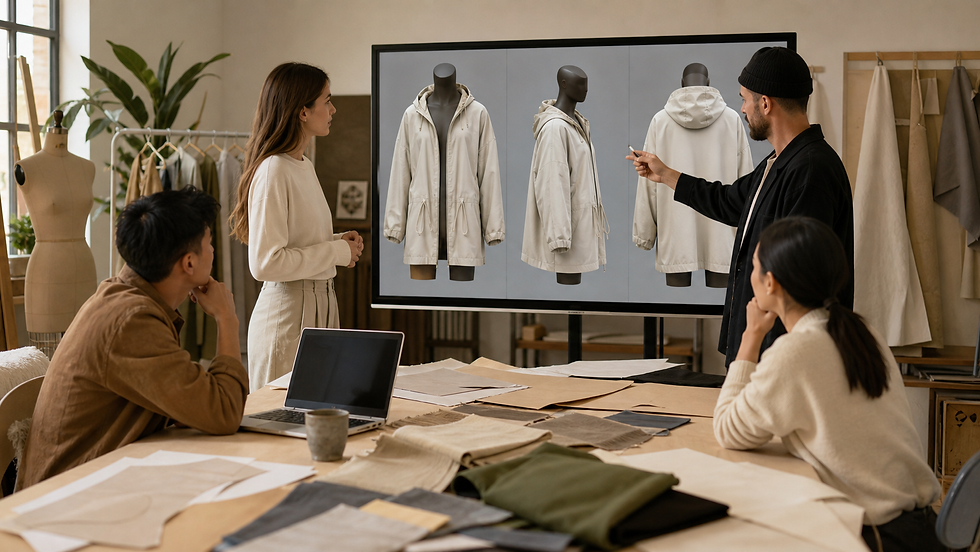
Sustainable digital fashion is moving from a brand-value statement into a production discipline. For fashion teams, the question is no longer whether 3D tools look impressive. The question is whether digital garment workflows can reduce unnecessary samples, speed up approvals, improve fit confidence, and create reusable assets that keep working after the first campaign.
Mimic Digital Fashion is well positioned for this shift because its work connects 3D garment simulation, virtual accessories, avatars, scanning, motion capture, AI video, and fitting solutions. When those capabilities are planned as one workflow, sustainability becomes practical rather than abstract.
This guide explains how brands can use sustainable digital fashion to reduce waste across design, sampling, ecommerce, wholesale, and customer experience while still protecting creative quality and product truth.
Table of Contents
What Sustainable Digital Fashion Means
Sustainable digital fashion means using digital production tools to reduce waste, compress unnecessary physical steps, and make better decisions before materials, transport, and studio resources are committed. It is not only about virtual clothing for digital worlds. It is also about how real fashion products are designed, reviewed, marketed, fitted, and sold.
A 3D garment can help a team evaluate silhouette, fabric behavior, styling, colorways, scale, and campaign direction before every option becomes a physical sample. It can later support 3D fashion product visualization, virtual showrooms, ecommerce imagery, AR try-ons, and internal training. The same master asset can create value across many moments instead of being rebuilt for each output.

Traditional Sampling vs 3D Workflows
Traditional sampling remains important for final touch, quality, fabric feel, and manufacturing validation. The waste appears when teams make too many early physical samples simply to answer visual, styling, proportion, or campaign questions that could have been tested digitally first.
Early design review: use 3D simulation to compare silhouettes, fabric drape, trims, and colorways before producing every variation physically.
Marketing preparation: build approved campaign visuals, lookbook options, and ecommerce angles from digital assets while final samples are still limited.
Wholesale selling: replace some travel-heavy preview cycles with virtual rooms, buyer-ready assets, and detailed product storytelling.
Customer confidence: connect virtual try-on and fitting workflows to product data so shoppers can understand fit before ordering multiple sizes.
The strongest model is usually hybrid. Use digital workflows to reduce avoidable iteration, then reserve physical samples for decisions where touch, construction, compliance, and manufacturing proof are essential.
Benefits Across the Fashion Customer Journey
Sustainability improves when each digital asset is useful beyond one internal review. A garment created for sampling can also support discovery, consideration, purchase confidence, and loyalty. That is why sustainable digital fashion should be mapped to the customer journey, not treated as a back-office experiment.
Discovery: photoreal 3D visuals and motion-led content help audiences understand a collection before a full physical campaign shoot.
Consideration: close-ups, material views, styling combinations, and virtual fashion showrooms help buyers compare products without relying on flat product photos alone.
Purchase: sizing and fitting solutions can reduce uncertainty, which may reduce unnecessary multi-size ordering and return pressure.
Retention: approved assets can support avatar styling, loyalty drops, personalized edits, and seasonal refreshes without starting from zero.

This connects directly with Mimic Digital Fashion's work in virtual fashion showrooms, where digital garments become sales experiences rather than static files.
Industry Use Cases for Sustainable 3D Production
Different fashion teams will use the same sustainability workflow in different ways. Luxury teams may focus on visual control, editorial storytelling, and limited product access. Sportswear teams may focus on fit validation, product education, and variant volume. Agencies may focus on campaign agility and immersive storytelling.
Luxury and couture: create photoreal digital garments, accessories, and campaign environments while limiting early physical sample movement.
Ecommerce teams: use consistent product visualization, close-ups, motion, and virtual try-on to improve customer confidence.
Wholesale and retail: turn showrooms into reusable digital spaces for buyer education, staff training, and launch previews.
Creative agencies: build campaign concepts, AI video, avatar-led stories, and XR activations from approved production assets.
Digital-first collections: extend physical launches into virtual clothing, avatar styling, and immersive experiences linked to long-term brand communities.
Data and Asset Checklist
A sustainable 3D workflow depends on clean inputs. If the data is incomplete, teams risk creating attractive visuals that cannot support fit, ecommerce, production review, or reuse. The checklist should cover product truth, visual standards, technical constraints, and governance.
Product data: patterns, measurements, size range, trims, colorways, construction notes, fabric behavior, and fit intent.
Visual data: approved lighting, camera angles, material references, texture quality, styling direction, and campaign mood.
Technical data: file formats, polygon budgets, render requirements, AR/VR targets, ecommerce constraints, and mobile performance rules.
Governance data: approval owners, version names, usage rights, licensing limits, sustainability claims, and privacy rules for scans or customer fit data.
This checklist also supports 3D fashion asset management, because the sustainability value increases when assets are searchable, approved, rights-safe, and easy to adapt for the next channel.

Implementation Roadmap
A practical roadmap should begin with a narrow pilot rather than a total transformation. Choose one collection, one product category, or one campaign moment where physical sampling, content production, or buyer education is creating measurable friction.
Define the sustainability goal: fewer early samples, fewer reshoots, faster approvals, fewer returns, or better reuse of approved assets.
Select the pilot assets: one garment group, accessory line, avatar model, or fitting use case with enough business value to measure.
Build the 3D source of truth: simulation, materials, trims, movement, fit references, and approved visuals.
Adapt for channels: ecommerce, campaign, showroom, AI styling, virtual try-on, retail training, or XR experience.
Measure and document: compare sample count, production time, asset reuse, engagement, return signals, and team adoption against the old workflow.
Mimic Digital Fashion's portfolio shows why this roadmap needs both craft and technical discipline: the asset has to look beautiful, but it also has to survive the realities of channel adaptation.
Mistakes, KPIs, and Responsible Claims
The biggest mistake is making sustainability claims without a measurable workflow behind them. Digital production can reduce some forms of waste, but only when teams track what changed: sample rounds, travel, production hours, physical content shoots, return pressure, or asset reuse.
Avoid treating 3D as a one-off render. Build reusable master assets with metadata, approvals, and channel versions.
Avoid skipping fit validation. Customer-facing try-on and sizing claims need careful data, testing, and human review.
Avoid vague carbon promises. Track concrete operational changes first, then communicate carefully and transparently.
Avoid collecting unnecessary customer data. Body scans, fit profiles, uploaded photos, and personalization signals require consent and retention rules.
Useful KPIs include sample rounds avoided, asset reuse rate, time from concept to approved visual, cost per usable visual, ecommerce engagement, virtual try-on completion, return-rate signals, buyer approval speed, and rights-complete asset coverage. These metrics connect sustainable intent with business evidence.

Future Trends
The next phase of sustainable digital fashion will be more connected. Brands will expect one approved garment asset to support sampling, ecommerce, AI styling, AR try-on, VR retail, social content, wholesale previews, and digital wardrobe experiences. That shift makes asset quality and governance more important, not less.
Generative AI will make variations faster, but approved 3D assets will remain the truth layer. The best workflows will combine human creative direction, realistic garment simulation, responsible AI controls, and performance measurement. This is where AI fashion personalization becomes stronger: personalization can only be trusted when the underlying product assets are accurate, rights-safe, and fit-aware.
FAQ
What is sustainable digital fashion?
It is the use of digital garment creation, 3D simulation, virtual samples, avatars, fitting data, and reusable assets to reduce unnecessary physical production steps and improve fashion decision-making.
Can 3D workflows replace all physical samples?
No. Physical samples are still important for final hand feel, construction, and manufacturing validation. The goal is to reduce avoidable early iterations and reserve physical samples for decisions that truly require them.
How do virtual samples reduce waste?
Virtual samples let teams evaluate silhouette, fabric behavior, styling, colorways, and campaign direction before producing every option physically. This can reduce sample rounds, reshoots, and duplicated content production.
Which fashion teams benefit most from sustainable 3D workflows?
Design, merchandising, ecommerce, marketing, wholesale, retail training, and creative production teams can all benefit when the same approved asset supports review, visualization, selling, and customer experience.
What data is needed for accurate 3D garment simulation?
Teams need patterns, measurements, fabric references, trims, construction notes, colorways, fit intent, texture references, and channel requirements. Better input data usually creates more reusable output assets.
How does virtual try-on support sustainability?
Virtual try-on can improve customer confidence by showing fit, styling, and scale before purchase. When implemented carefully, it may reduce uncertainty-driven ordering and return pressure.
Which KPIs should brands track?
Track sample rounds avoided, production time saved, asset reuse rate, cost per usable visual, buyer approval speed, ecommerce engagement, virtual try-on completion, and return-rate signals where available.
Where should a brand start?
Start with one high-value pilot: a capsule collection, hero accessory, virtual showroom, ecommerce product set, or fitting workflow. Measure the result, then turn the best pieces into a repeatable asset pipeline.
Conclusion
Sustainable digital fashion becomes meaningful when it changes how teams work. 3D garment simulation, virtual samples, fitting data, avatars, and reusable assets can reduce unnecessary waste while helping brands launch richer, more accurate fashion experiences.
For fashion brands, creative teams, and agencies ready to build lower-waste digital production systems, explore Mimic Digital Fashion services or contact the Berlin studio to plan a sustainable 3D workflow for your next collection, campaign, showroom, or customer experience.

Comments