
Digital Fashion Innovation: The Breakthrough Technologies Driving the Next Era
- Mimic Digital Fashion
- Dec 29, 2025
- 8 min read
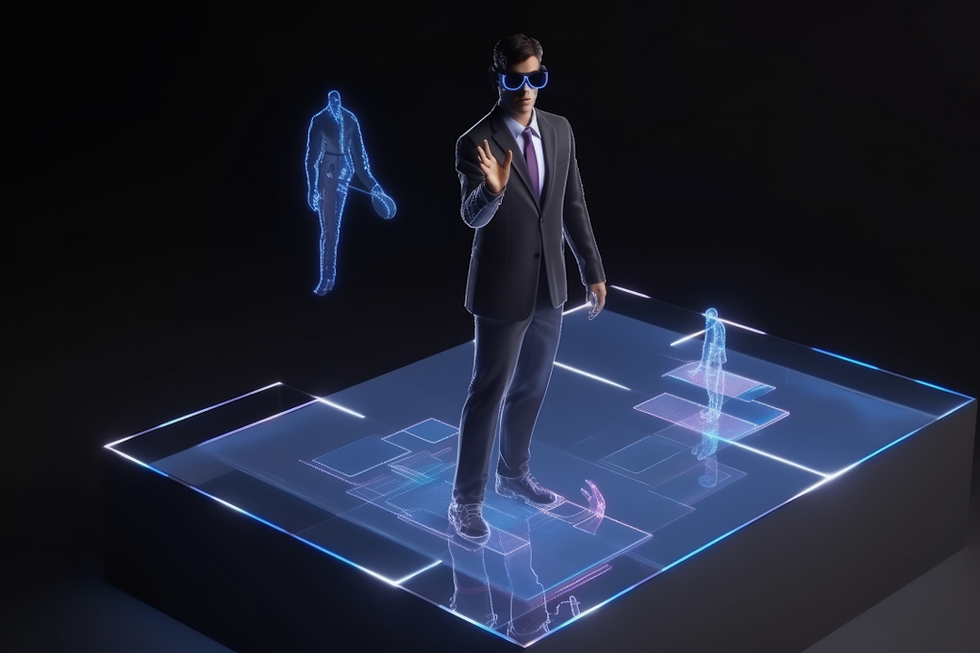
Digital fashion is no longer a speculative sidebar to physical design—it’s becoming a parallel atelier with its own materials, lighting rules, production timelines, and cultural gravity. The next era isn’t defined by a single invention, but by an interlocking stack: photoreal garment simulation, scanned bodies, performance capture, real-time rendering, and AI-assisted ideation—each advancing the other.
What makes digital fashion innovation feel like a genuine shift is the way craft has moved upstream. The “look” is still editorial, but the pipeline is increasingly engineering-grade: pattern logic, topology, shader fidelity, and fabric behavior are treated as first-class design constraints. In the best work, technology doesn’t decorate fashion; it becomes the new textile.
This article maps the breakthrough technologies driving today’s digital couture—how they work, what they unlock, and where the seams still show. The goal: a clear, fashion-native view of the tools reshaping runway imagery, virtual try-ons, immersive retail, and avatar-led storytelling—without losing the discipline of fit, drape, and silhouette.
Table of Contents
The New Foundation: 3D Garment Craft as a Production Standard

The most consequential shift isn’t “making clothes digital.” It’s the normalization of garment-grade 3D pipelines—where a look begins as a pattern-driven object, not a sculpted approximation.
Pattern-based construction, not just modelingThe strongest digital looks start with garment logic: panels, seams, stitches, allowances, and tension. This creates consistency across sizes, poses, and motion. When digital fashion innovation is treated as craft, the pattern is a design document—editable, auditable, reusable.
Fabric physics as creative directionCloth simulation has become a language. The difference between silk charmeuse and coated nylon isn’t merely texture; it’s inertia, fold frequency, edge stiffness, and recovery. Modern pipelines treat “drape” as a design parameter you art-direct—then lock.
Material realism: shader stacks + lighting disciplineDigital couture lives or dies on surface truth: specular roll-off, subsurface scattering, anisotropy, micro-wrinkle response, and how a textile reacts under hard key light versus soft ambient bounce. The editorial eye is still essential—only now it sits beside calibrated rendering and material authoring.
Interoperable outputs for multiple end-usesOne garment may need:
a high-res editorial render
a mid-poly real-time asset for XR
a try-on-ready version optimized for mobileThese aren’t separate garments—they’re LODs (levels of detail) of the same design intent.
Digital Humans, Fit Systems, and the Rise of Avatar-First Design

If garments are the language, avatars are the body that speaks it. The next era is shaped by digital humans that can carry fashion with believable anatomy, motion, and emotional presence.
3D scanning and photogrammetry for body truthScanned bodies capture the subtleties that generic mannequins erase: posture, asymmetry, shoulder slope, waist-to-hip transitions. This matters for fit realism and for storytelling—because personality sits inside proportion.
Parametric bodies and size intelligenceBeyond single scans, brands need systems: body families, grading logic, and measurement-driven retargeting. This is where digital fashion innovation becomes scalable—turning bespoke avatar work into a reusable fit infrastructure.
Rigging and deformation as fashion infrastructureA garment isn’t “done” until it survives movement: arm lifts, twist, stride, sit, run. Quality rigging and correct deformation protect silhouette intent under motion, especially around elbows, shoulders, and the waistline.
Motion capture for runway and performanceThe runway has choreography—pace, weight shifts, garment swing. Motion capture and performance capture bring that specificity to digital models, so garments behave like designed objects, not floating costumes. It also enables repeatable “hero walks” for campaigns across seasons.
XR Fashion: AR Try-Ons, VR Runways, and Spatial Retail

XR is where digital garments leave the render farm and enter lived space. AR and VR don’t replace editorial imagery; they extend it into interaction.
AR virtual try-on: fit perception and conversion reality: AR try-ons sit at the crossroads of aesthetics and accuracy. The challenge is not just overlaying a garment—it’s aligning scale, occlusion, body tracking, and fabric behavior to feel plausible in a phone camera world. For a deeper look at where try-on is heading, Mimic Digital Fashion’s coverage of virtual try-on futures is a strong reference point. Read more: https://www.mimicdigitalfashion.com/post/future-of-fashion-and-virtual-try-ons)
Tracking, occlusion, and lighting match: The “uncanny” feeling often comes from mismatched lighting and imperfect occlusion—hair, hands, bags, and layered clothing. The breakthroughs here are camera-aware rendering and smarter segmentation that respects the messiness of real life.
VR fashion: immersion, scale, and world-building: VR is less about “trying on” and more about atmosphere—virtual showrooms, runway worlds, and experiential retail. It’s fashion as environment: scale, sound design, spatial narrative. For readers exploring this lane, Mimic’s VR fashion article provides useful context. Read more: https://www.mimicdigitalfashion.com/post/virtual-reality-fashion)
AR fashion as public-facing storytelling: AR is also cultural placement—filters, city-scale activations, interactive garments that live on social platforms. Mimic’s AR fashion breakdown connects these experiences to broader pipeline considerations. (Read more: https://www.mimicdigitalfashion.com/post/augmented-reality-fashion)
AI in the Atelier: From Concept to Pattern Intelligence
AI’s most interesting role in fashion isn’t replacing designers—it’s compressing iteration time and widening the ideation surface area. The breakthroughs are less about novelty images and more about decision support inside the pipeline.
Concept exploration with constraintsAI can rapidly propose silhouettes, textile moods, trim logic, and palette directions—but the value appears when you constrain it: brand codes, references, garment type rules, seasonal intent. That’s where it becomes a collaborator rather than a slot machine.
Texture, print, and material variationAI-assisted textile development can generate print families, weave suggestions, and surface maps that then get refined through material authoring. The last mile is still human—because “expensive” is an editorial judgment, not a dataset.
Pipeline acceleration: tagging, versioning, asset QAAI is quietly useful in asset management: naming conventions, metadata extraction, similarity search, and spotting inconsistencies across garment variants. That’s not glamorous, but it’s the difference between one campaign and an ongoing program.
Design intelligence as a studio advantageFor a fashion-grounded view of AI’s role in design, Mimic’s AI fashion design post complements this section well. (Read more:: https://www.mimicdigitalfashion.com/post/ai-fashion-design)
Real-Time Engines and Virtual Cinematography for Fashion

Real-time rendering has moved from gaming into fashion production—not as a compromise, but as a new camera language. The breakthrough is speed with control.
Real-time lookdev for faster creative decisionsInstead of waiting on long renders, teams can evaluate fabric response, lighting mood, and camera movement instantly—then refine. This is where digital fashion innovation becomes practical: it shortens the distance between idea and image.
Virtual production principles for fashion campaignsWith real-time engines, you can art-direct environments, animate lights, and choreograph camera moves like a digital film set. Editorial and cinematic aesthetics become repeatable, not accidental.
Hybrid workflows: editorial renders + real-time deliveryMany studios run a dual output: high-end offline renders for hero imagery, and optimized real-time assets for XR and interactive moments. The discipline is maintaining consistency across both.
Comparison Table
Technology Layer | Best For | Strength | Trade-Off | Typical Outputs |
Pattern-based 3D garment build | True-to-design construction | Fit logic, repeatability | Requires garment knowledge + clean patterns | Simulation-ready garments, campaign renders |
Cloth simulation (high fidelity) | Editorial drape and motion | Fabric realism, silhouette integrity | Compute-heavy; tuning takes time | High-end stills, animation, filmic shots |
3D scanning / photogrammetry | Body truth + realism | Accurate proportions, identity detail | Cleanup + retopo; privacy considerations | Digital doubles, fit avatars |
Motion capture | Runway movement, performance | Natural gait and timing | Needs cleanup and retargeting | Walk cycles, choreography, performances |
Real-time engines | Interactive fashion and rapid lookdev | Speed, iteration, spatial worlds | Optimization constraints | XR assets, virtual runways, live previews |
AR try-on systems | Consumer engagement + retail UX | Accessibility and scale | Occlusion/lighting limits | Mobile try-ons, social activations |
AI-assisted design tools | Ideation + pipeline automation | Faster exploration, ops efficiency | Needs constraints; can homogenize | Concept boards, print families, tagging |
Applications Across Industries

Digital fashion has expanded beyond runway fantasy. Its most compelling uses are where craft meets utility—and where the same garment asset can serve multiple worlds.
Luxury and premium retail: interactive product storytelling, virtual showrooms, AR activations
E-commerce: try-on experiences, size visualization, reduced returns via better expectation-setting
Entertainment and gaming: character wardrobe design, digital costume continuity, branded skins
Music and performance: stage looks designed for motion capture and virtual cinematography
Film and advertising: rapid wardrobe iteration, continuity control, photoreal campaign assets
Education and training: garment construction visualization, digital pattern literacy
For brands building production-ready pipelines—not just one-off experiments—Mimic Digital Fashion’s service overview is the most direct internal reference to how these workflows are typically structured end-to-end. (Internal link: https://www.mimicdigitalfashion.com/services)
Benefits

The benefits of this era aren’t abstract. They are measurable shifts in how fashion is designed, approved, and experienced.
Shorter iteration cycles from concept to campaign-ready visuals
Asset reusability across editorial, XR, and interactive channels
Higher design confidence through accurate drape and motion behavior
New creative surfaces: virtual runways, avatar-led narratives, spatial retail
Better stakeholder alignment via consistent previews and approvals
Reduced physical sampling for early-stage exploration (when used responsibly)
Challenges
The glamour is real—but so are the constraints. The next era will be defined by who solves these friction points with taste and discipline.
Interoperability issues across tools, formats, and rendering targets
Consistency across LODs (editorial realism vs real-time optimization)
Fit credibility in try-on experiences when tracking is imperfect
Material truth: textiles that look correct under multiple lighting contexts
Data ethics and privacy around scanned bodies and biometric identity
Talent gap: the need for hybrid artists who understand both fashion construction and 3D pipelines
Future Outlook

The next phase of digital fashion innovation will be less about spectacle and more about infrastructure—systems that make digital garments as dependable as physical ones.
Expect three evolutions:
AI becomes less visual, more structuralMore assistance in grading logic, pattern variation, and asset QA—less emphasis on novelty imagery. The most valuable AI will be the kind that quietly prevents mistakes.
XR becomes more “fashion-correct”AR try-on will improve through better occlusion, lighting estimation, and body tracking, making garments feel grounded rather than pasted on. VR fashion will lean harder into world-building—runway as cinema, retail as spatial narrative.
Editorial vs real-time workflows will convergeThe industry will normalize hybrid pipelines where the same garment supports hero renders and interactive experiences without losing identity. This is where studio discipline matters: consistent materials, calibrated lighting, and simulation settings that survive multiple outputs.
To contextualize the broader market momentum behind virtual clothing—and why it’s expanding across platforms—Mimic’s article on virtual clothing as a market shift is a useful companion read. (Read more:: https://www.mimicdigitalfashion.com/post/digital-fashion-why-virtual-clothing-is-becoming-the-next-big-market)
FAQs
1) What does “digital fashion innovation” actually include?
It spans the full stack: 3D garment creation, cloth simulation, digital humans, scanning, motion capture, real-time rendering, and XR experiences like AR try-ons and VR fashion worlds.
2) Is 3D garment simulation necessary, or can you just model the look?
You can model a silhouette, but simulation is what makes fabric behave like fabric. If you need believable drape, motion, and fit response, simulation becomes essential.
3) How do digital garments move from editorial renders to AR try-on?
Through optimization: reducing polycount, baking textures, simplifying shaders, and preparing multiple LODs—while preserving the garment’s identity (silhouette, material cues, key details).
4) What’s the role of 3D scanning in digital fashion?
Scanning provides body truth—proportions, posture, and anatomical nuance. It supports more credible fit visualization and more lifelike digital humans for campaigns.
5) Why is motion capture important for runway-style visuals?
Because gait and weight shifts define how a garment reads. Motion capture reproduces natural timing and momentum, which makes fabric movement and silhouette dynamics feel designed—not simulated by chance.
6) Will AI replace fashion designers in this pipeline?
No. AI can accelerate exploration and reduce operational friction, but taste, brand codes, proportion, and fashion judgment remain human responsibilities.
7) What’s the biggest technical barrier today?
Consistency across contexts: making a garment look “the same” in a high-end render, a real-time engine, and an AR try-on—while maintaining believable fabric behavior.
8) How do brands start without overbuilding the pipeline?
Start with a single hero workflow: one garment, one avatar, one output target (editorial or XR). Prove repeatability, then expand into LODs and reuse strategies.
Conclusion
The next era of fashion will not be defined by whether garments are physical or digital, but by whether they are built with integrity. When the pipeline respects pattern logic, fabric behavior, motion truth, and material realism, the output stops feeling like “tech.” It feels like fashion—just authored in a new medium.
That is the core of digital fashion innovation: not novelty, but precision. A silhouette that holds under movement. A textile that behaves under light. An avatar that carries identity rather than generic perfection. The breakthroughs are here, and they’re accelerating—but the most future-proof work will always be the work that treats digital couture as craft.


Comments